Common Water Damage Mistakes How to Avoid Them
Water damage is one of the quickest ways to turn a healthy watch into a long night on the bench. It usually happens quietly. A quick hand wash, a bit of rain, a splash from the sink and suddenly a watch that ran perfectly fine is fogging under the crystal or stopping altogether. What surprises most people is just how little water it takes to create a major problem. A single drop inside a movement is enough to rust a pivot, stain a dial or seize a gear train. Yet almost every case of water damage starts with the same handful of mistakes.
The first mistake is assuming a watch is still water resistant simply because it was rated that way when it was new. Gaskets age. They dry out, flatten, crack and lose their ability to seal. Crowns loosen over years of wear. Casebacks shift after previous battery changes or servicing. Even a watch that never goes underwater can lose resistance just from time passing. The printed depth rating on the dial does not mean much without fresh gaskets and proper testing. It is natural to trust what the watch once could do, but watches are like anything else. They need upkeep to hold their original capabilities.
Another common mistake is treating water resistance as a permanent feature. Someone may shower with their watch on for years with no issue, until one day the heat from the water softens the remaining seals just enough for moisture to slip inside. Hot water and steam are particularly hard on gaskets that are already aging. Chlorine from pools and chemicals in soaps also take their toll. A watch might survive it many times, but it only takes one moment of weakened sealing for moisture to find its way in. Once that happens, the damage begins almost immediately.
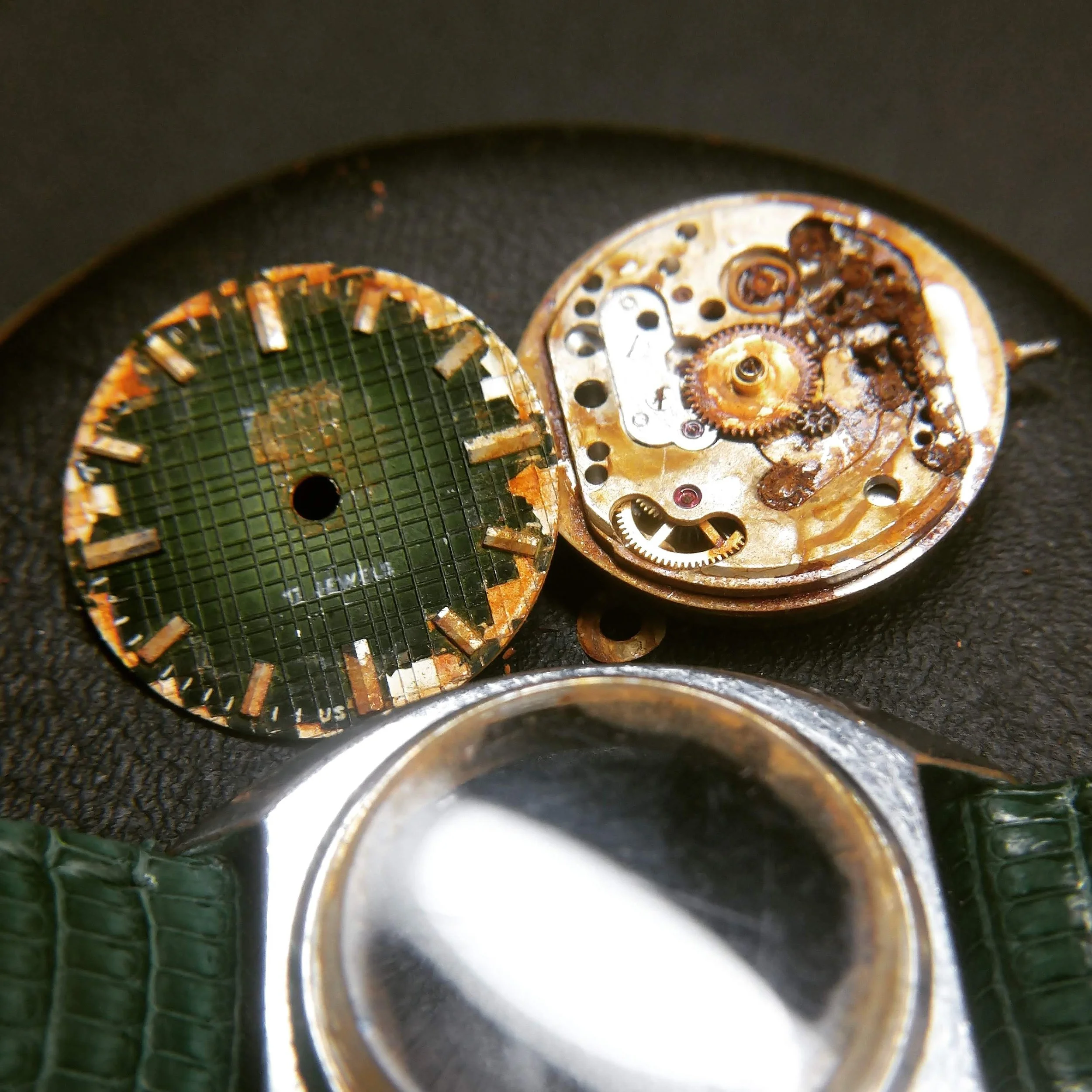
Viontage Soviet ladies watch that was exposed to water. This watch has no water resistance built into the design.
Then there is the simple but costly habit of leaving the crown slightly pulled out. You would be surprised how often this leads to water entering the case. The watch may look fully pressed in, but even a slight gap can break the seal. Setting the time and forgetting to lock the crown back down is one of the fastest ways to invite moisture, especially on watches with screw down crowns. If the crown is not fully secured, the water resistance rating effectively becomes zero.
Another trap is assuming a vintage watch is safe near water because it has survived decades already. Older watches are especially vulnerable because their seals and case tolerances were never designed for the level of exposure many people give modern watches. Even something as simple as rinsing hands can be risky for a vintage piece. Age does not make a watch tougher. It often makes it more delicate.
When water does get inside, the biggest mistake is waiting to see if it clears up on its own. Moisture that evaporates still leaves corrosion behind. A fogged crystal may go clear again, but the damage continues quietly inside the movement. Steel rusts quickly, oil emulsifies and plates on bridges and wheels can stain permanently. Waiting turns a simple drying and cleaning into a full movement service or worse. Time is everything when water appears in a watch.
Avoiding these problems is easier than dealing with the aftermath. Regular gasket changes and water resistance testing keep the watch honest about what it can still handle. Keeping crowns fully secured makes a huge difference. Removing the watch before showers, hot tubs or swimming pools eliminates almost all steam related failures. And vintage watches are best treated as the dry land creatures they are.
In the shop, water damage repairs often tell the same story. A watch that was trusted a little too much, a seal that was overdue for replacement or a quick splash that seemed harmless. The damage is almost always preventable. With a little attention and respect for what a watch can and cannot do, most of these situations never need to happen.
A watch can withstand quite a bit, but water finds weaknesses fast. Keeping it out is not difficult once you know where those weaknesses hide. A fresh set of gaskets, a closed crown and a bit of caution go a long way in keeping a movement dry and healthy for years to come.
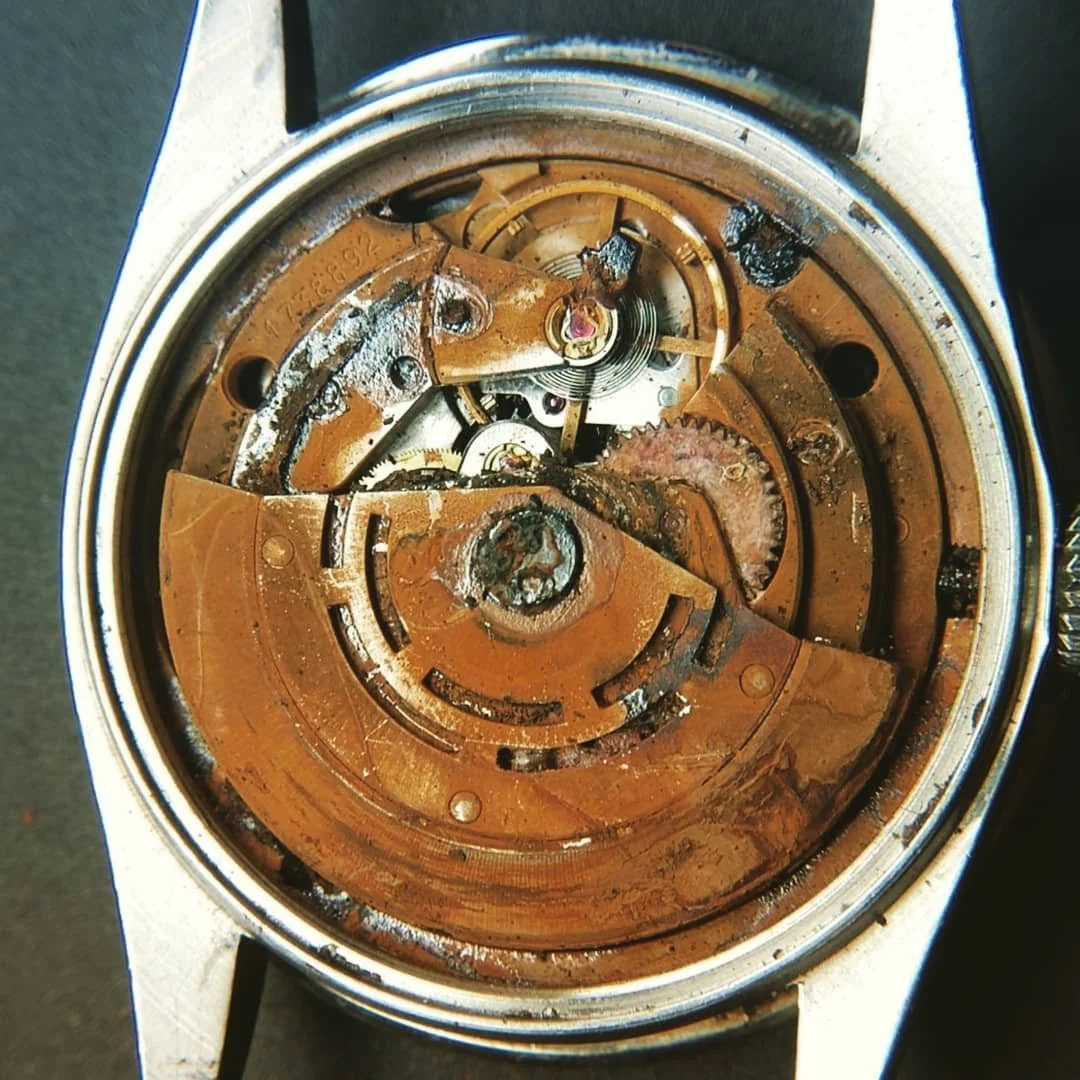
Rolex Datejust that went for a swim in the Caribbean ocean with the crown not screwed down and didn’t take to kindly to the water