Why Collectors Still Chase Mechanical Over Smartwatches
Smartwatches are everywhere. They track steps, deliver notifications, measure sleep and update themselves overnight. They are efficient, connected and undeniably useful. Yet despite all of that, collectors continue to seek out mechanical watches with a level of passion that technology has not replaced. The reason has very little to do with features and everything to do with permanence, craftsmanship and connection.
A mechanical watch is not trying to keep up with the world. It exists on its own terms. It does not need updates, charging cables or compatibility checks. Its purpose is simple and focused. It measures time through physical motion, powered by springs, gears and balance wheels working in harmony. That simplicity is not a limitation, it’s the point. Collectors value the fact that a mechanical watch does one thing well and does it the same way it did decades ago.
There is also a sense of continuity that technology cannot offer. A smartwatch is obsolete the moment a newer version is released. Software changes, batteries degrade and support eventually disappears. Mechanical watches move in the opposite direction, they age, but they do not expire. A well made movement can be serviced, adjusted and returned to life indefinitely. Collectors know that the watch on their wrist today can still be running generations from now with the same components doing the same job.
Craftsmanship plays a major role as well. Mechanical watches are tangible proof of human skill. Even industrially produced movements rely on precision manufacturing, careful assembly and regulation by trained hands. Finishing choices, architecture and engineering decisions are all visible under magnification. Collectors appreciate the effort that goes into making something that functions without electronics. Each watch represents a set of solutions to the same challenge, and that variety is part of the appeal.
Mechanical watches also invite participation. Winding a watch, setting it, listening to it and wearing it daily creates a small ritual. The watch responds to how it is worn and cared for. It gains and loses time within predictable limits. It reflects its environment and its owner. Smartwatches remove that relationship entirely. They operate independently, often invisibly, doing their work without asking anything in return. For collectors, that distance removes the emotional connection.
There is also the matter of identity. Mechanical watches tell stories about design eras, technological breakthroughs and cultural moments. A vintage chronograph, a mid century dress watch or a rugged dive watch all reflect the priorities of their time. Collectors are drawn to these details, they are not just buying an object, they are preserving a piece of history. Smartwatches are designed to feel current, not historical. Once they stop being current, they lose their relevance.
Longevity matters too. A mechanical watch rewards maintenance. It can be disassembled, cleaned, lubricated and returned to service again and again. The process leaves no mystery. Everything is accessible and understandable. Smartwatches are sealed systems by comparison. When something fails, replacement is often the only option. Collectors tend to gravitate toward objects that can be understood and preserved rather than replaced.
In the shop, this difference shows up clearly. Mechanical watches come in with decades of wear and stories attached to them. They are serviced not because they stopped being useful, but because they are worth keeping alive. Smartwatches, when they arrive at all, are usually already finished with their useful life. The contrast is stark.
Collectors are not ignoring technology. Many wear smartwatches alongside mechanical ones. But when it comes to collecting, preserving and forming lasting connections, mechanical watches still hold ground that technology cannot replace. They are independent of trends, resistant to obsolescence and grounded in physical reality.
Those that wear mechanical watches value objects that endure, that can be understood, repaired and passed on. Smartwatches may tell time efficiently, but mechanical watches give time weight. And that difference is something collectors are not ready to give up.
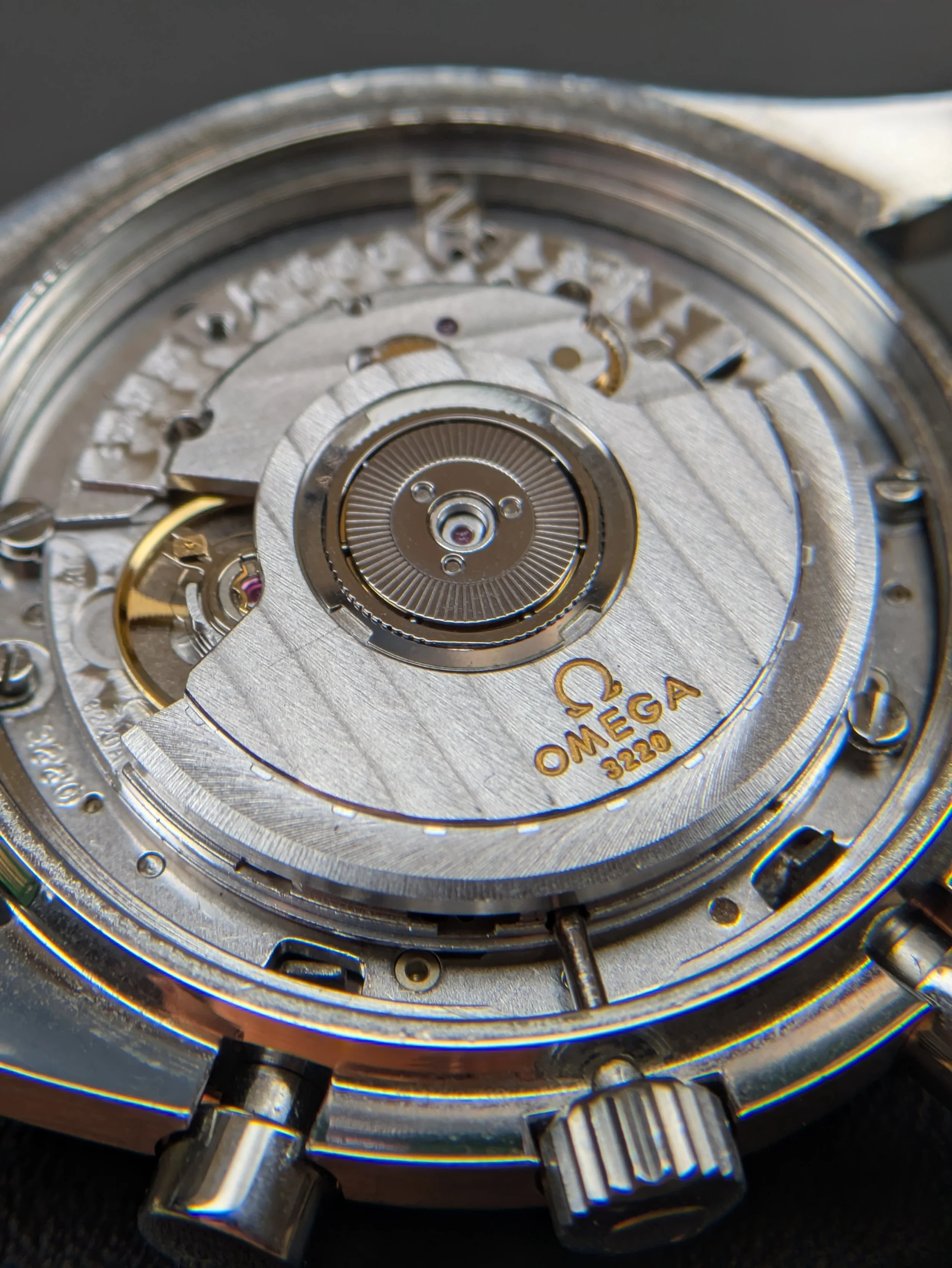
Omega 3220 movement from an Omega Speedmaster Reduced pictured